
Back to Blog
Knowledge
Flat Knit vs Circular Knit T-Shirts: Which Is Better for Modern Brands?
June 6, 2026 5 min read• By RBN Editorial Team
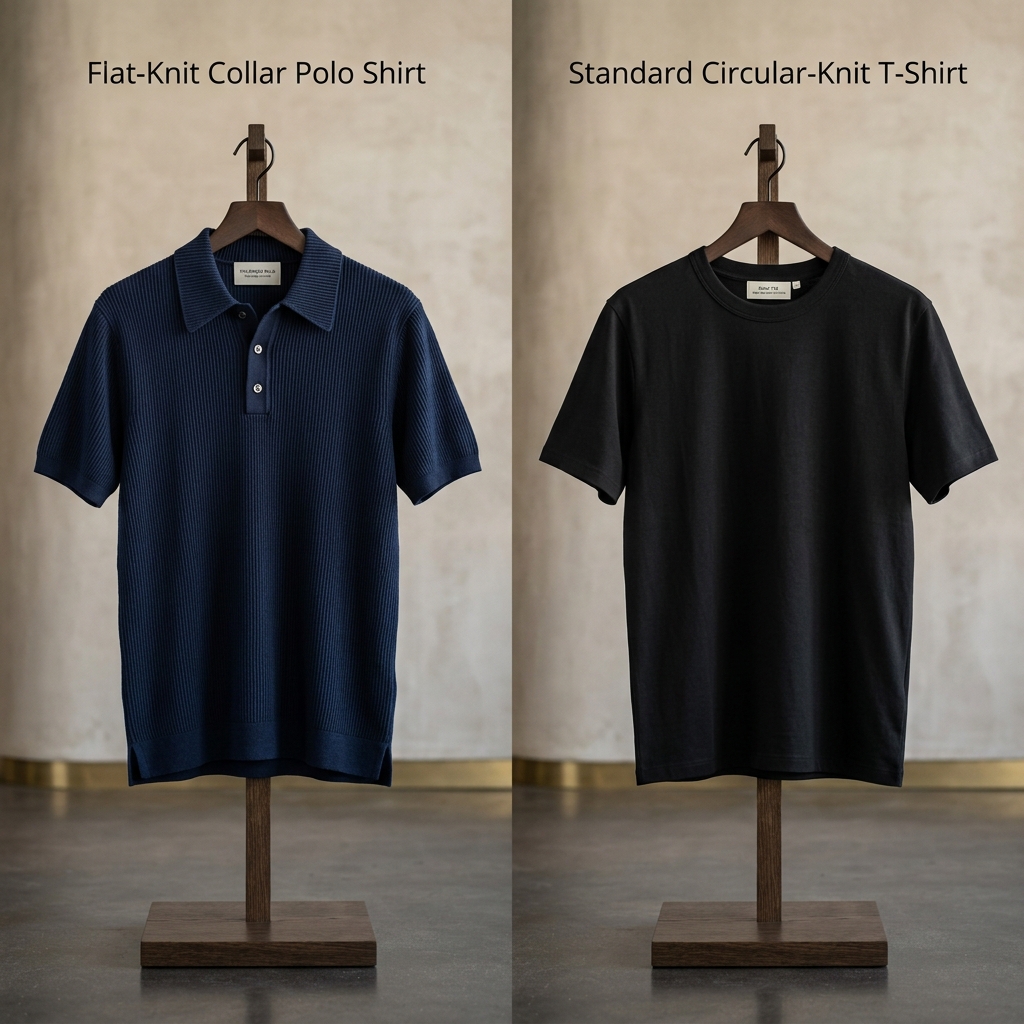
For modern fashion brands, choosing the right fabrication method is a foundational decision that impacts everything from brand positioning to product lifespan. While circular knits have dominated the basics industry for decades, flat knit construction is rapidly rising as the premium choice.
In this guide, we break down the core differences between flat knit and circular knit t-shirts to help you choose the best technology for your collection, quality standards, and unit economics.
The fundamental difference lies in the machine configuration and structural orientation of the knitting process.
Circular knitting uses a rotating cylinder of needles to produce a continuous tube of fabric. This fabric is later cut into pattern panels and sewn together. Flat knitting, on the other hand, operates on a flat bed of needles where panels are knitted individually and can be fully fashioned or integrated with collars and cuffs directly during the knit cycle.
Flat knit shirts offer a richer, soft-draped weight and handfeel. The texture is noticeably more defined, giving it a luxury sportswear appeal.
Unlike cut-and-sew circular knits which can warp or twist in the wash due to biased torque, flat knits are structurally balanced and retain their shape perfectly.
A flat knit collar is knitted as a single component, preventing the common 'bacon collar' ripple effect after washing. It lays flat and looks sharp indefinitely.
Because panels are knitted to shape, yarn consumption is optimized, reducing fabric waste to almost zero, aligning perfectly with modern sustainability standards.
At RBN, we treat every flat knit t-shirt as a high-precision engineering project. Our workflow is fully integrated to deliver premium consistency at scale.
Using Stoll technology, we produce 12GG and 14GG fine-gauge t-shirts that are exceptionally lightweight yet highly durable.
We develop customized structures like pique, waffle, pointelle, or flat-jersey stitches to give your brand a unique fabric texture.
All panels are pre-washed and treated in-house to achieve less than 3% residual shrinkage, ensuring a reliable fit.
Verify if the manufacturer has the appropriate fine-gauge machinery (12GG/14GG) for lightweight summer garments.
Ensure their programmers can customize collar shapes, pocket details, and seamless shoulder slopes correctly.
Confirm they have access to certified long-staple combed cotton and combed cotton blends to prevent pilling.
Inspect sample seams—premium flat knits require clean, loop-to-loop linking rather than overlocked seams.
Select a partner whose production capacity can support your scalability path from pilot runs to large seasonal collections.
In summary, circular knits remain the go-to choice for fast-fashion basics, but modern premium brands are increasingly adopting flat-knitted construction. The superior drape, collar stability, and high-end feel set your products apart immediately.
If you're ready to elevate your brand's knitwear collection, contact RBN today to start developing your custom samples.
We bring German engineering precision (Stoll) to flat knit production, helping premium apparel brands scale safely.
Explore CapabilitiesStart a dynamic design evaluation project with our technical staff.
Start a ProjectExperience complete control, transparency, and expert precision with RBN Garment.